Configuring IBM Cognos to Power BI Conversion Stage
This topic provides steps to configure the IBM Cognos to Power BI conversion.
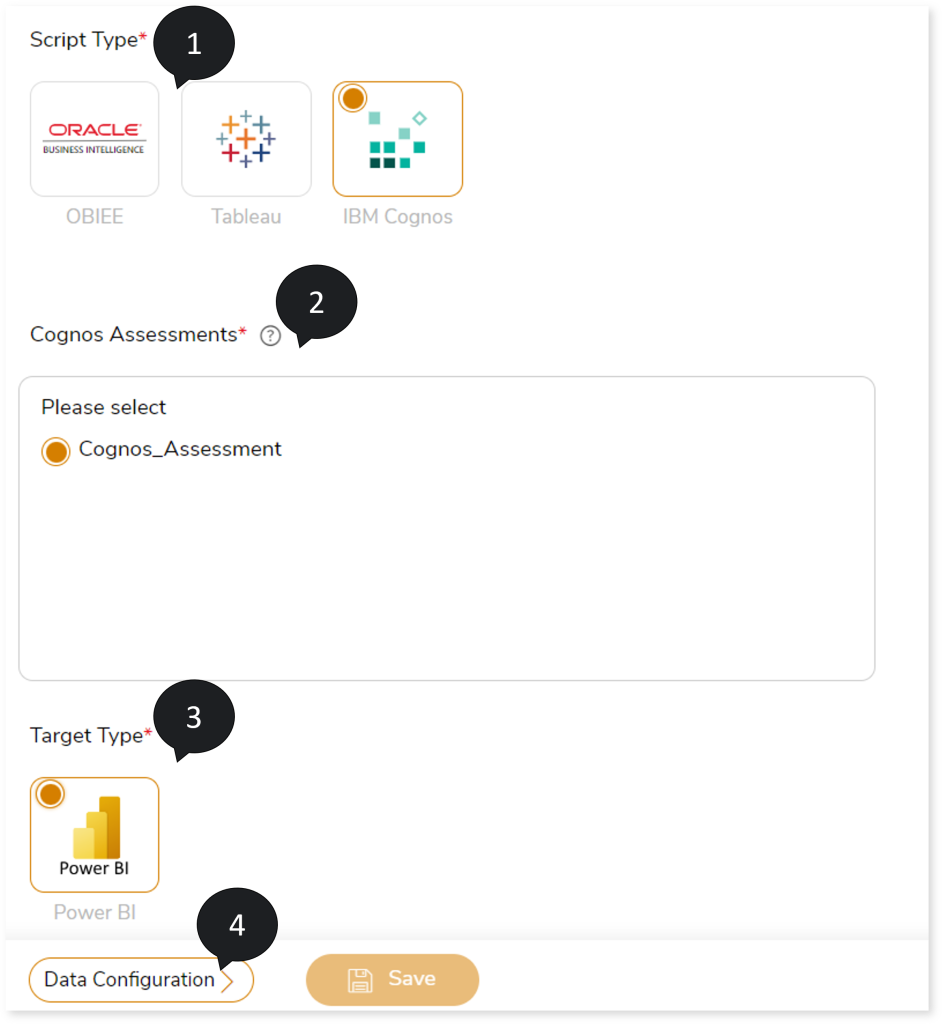
- In Script Type, select the script type as IBM Cognos.
- In Cognos Assessments, select the report from the Cognos assessment that you want to transform.
- In Target Type, select the target as Power BI.
- Click Data Configuration.
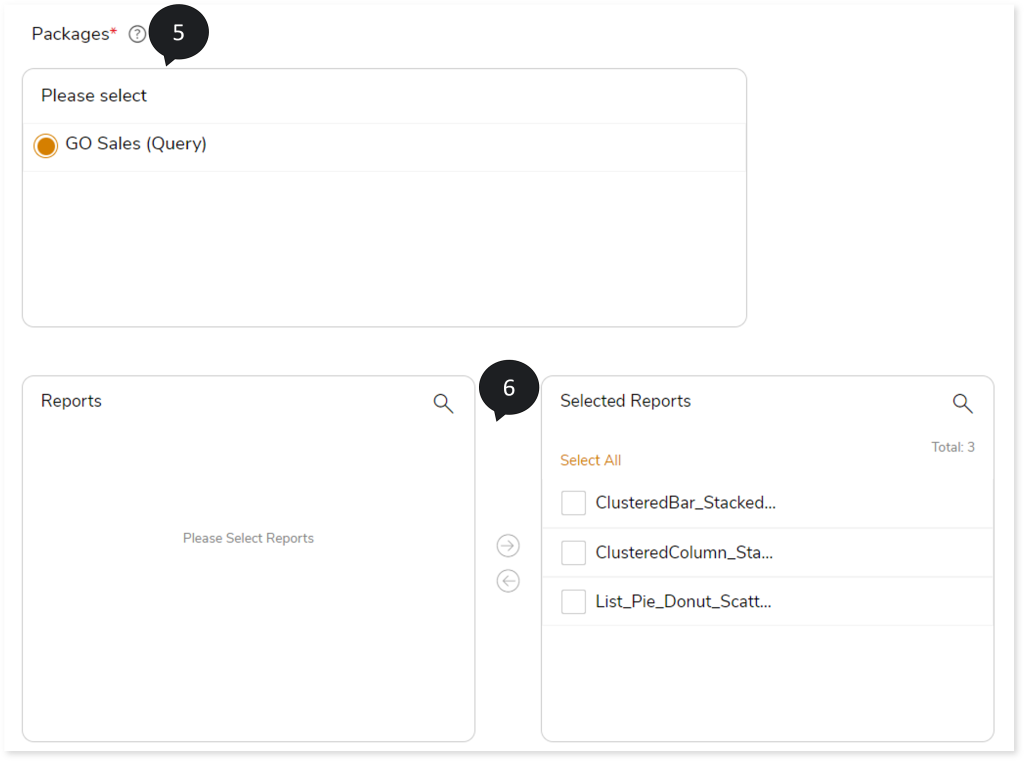
- In Packages, select the package from which you need to transform the reports.
- Select the reports that you need to transform to target. To select the reports to transform, follow the steps below.
- Select the required reports from the Reports card.
- Click
 to move the selected reports to the Selected Reports card.
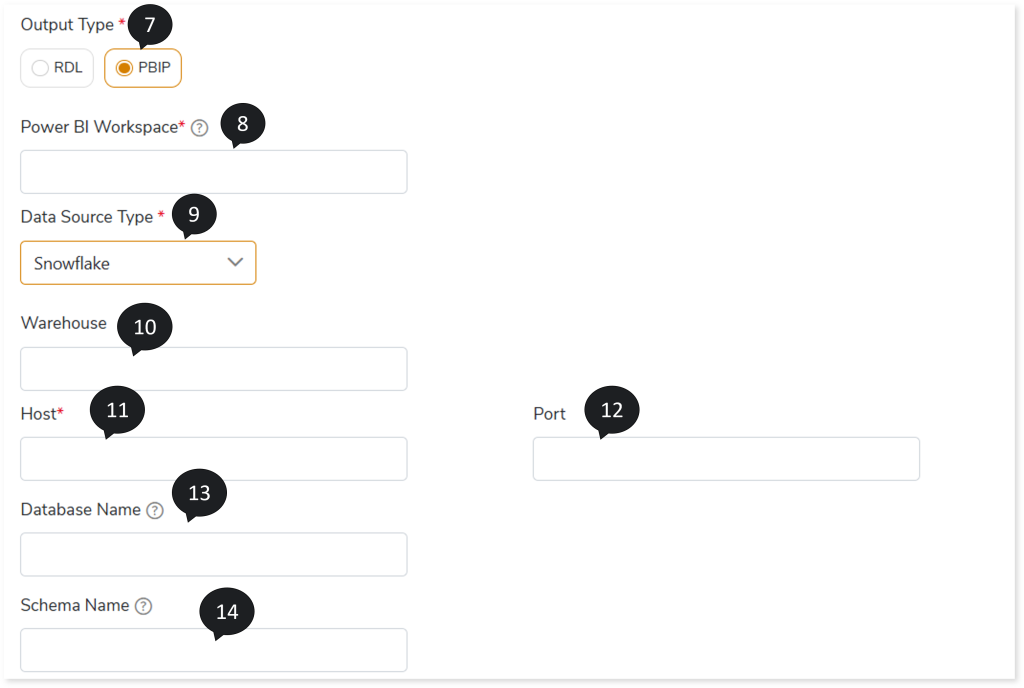
- In Output Type, select RDL or PBIP as output type format for the generated artifacts.
- In Power BI Workspace, provide the workspace name where you want to publish the output artifacts.
- In Datasource Type, select the source database such as SQL Server, Redshift, and Snowflake to load the data.
- In Warehouse, provide the data source warehouse details
- In Host, provide the data source host address
- In Port, provide the data source port number
- In Database Name, provide the database name from which you need to fetch the source data.
- In Schema Name, provide the corresponding schema from which you need to fetch the data.
- In AI Augmentation, select the preferred Transformation model to convert calculations that require augmented transformation and then optimize them and validate them for accuracy and optimal performance.
- In Transformation Model, select the preferred Transformation model to convert calculations that are not handled by the default LeapLogic Core transformation engine to the target equivalent. The Transformation Model supports both Open-Source AI models (LeapLogic) and Enterprise AI models (Amazon Bedrock such as Claude, Nova, etc.) for transformation.
The Open-Source AI models include:
- OpenOrca 7B, GPTQ 4-bit quantized Model (Hugging Face), Llama 8B, 16-bit quantized Model (Ollama), and Llama 8B, 4-bit quantized Model (Ollama): To convert small- to medium calculations.
- Code Llama 34B, GPTQ 4-bit quantized Model (Hugging Face): To convert complex calculations.
- In Additional Prompt, provide supplementary instructions in addition to system-generated prompts.
- In Response Fine Tuning, provide examples based on the additional prompt to fine-tune the response to align the generated output with your preferred level of detail.
- In Review Model, select one or more Review models from to perform syntax validation on the calculations transformed by the LeapLogic Core engine and the Transformation Model. The Review model validates the transformed calculations and recommends any changes as required until the calculation is thoroughly verified. You can configure multiple Review models. When multiple Review models are configured:
- The first Review model validates the calculations transformed by the LeapLogic Core engine and the Transformation model. If any calculations are identified as incorrectly transformed, it suggests updated calculations.
- The updated calculations are then passed to the next Review model, which validates them and suggests corrections, if required.
- This process continues through all configured Review models until the calculations are successfully validated, and the optimized queries are generated.
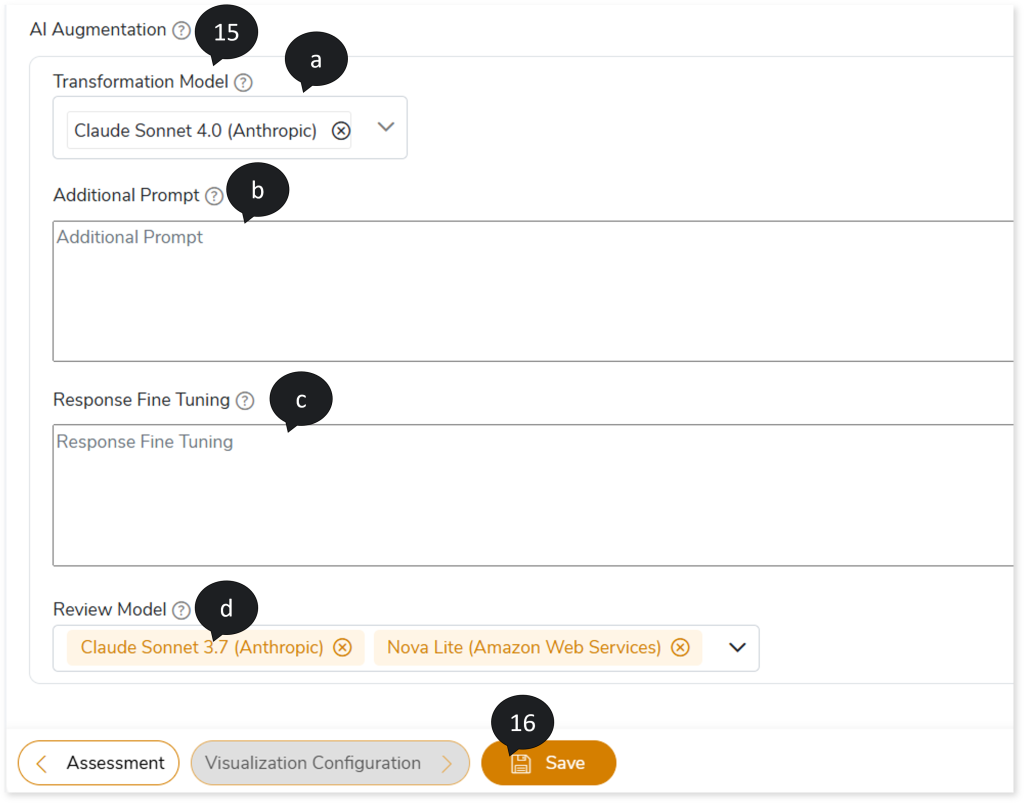
- Click Save to update the changes.
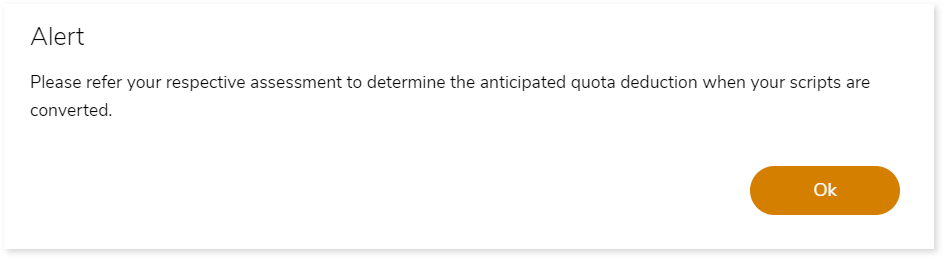
- An alert pop-up message appears. This message prompts you to refer your respective assessment to determine the anticipated quota deduction required when converting your scripts to target. Then click Ok.
- Click
 to provide a preferred pipeline name and to save the pipeline.
- Click
 to execute the integrated or standalone pipeline. Clicking (Execute) navigates you to the pipeline listing page which shows your pipeline status as Running state. It changes its state to Success when it is completed successfully.
- Click on your pipeline card to see reports.
To view the IBM Cognos to Power BI conversion report, visit IBM Cognos to Power BI Conversion Report.
 Leaplogic